
Roof leak, a water heater that let go in the attic, mold behind a wall, or smoke from a nearby fire. In a Beverly Hills home, the work is not only drying. It’s drying without losing original plaster, molding and finishes that are expensive to replace and hard to match. We have been doing this work across Los Angeles for 15 years, and we answer 24/7.
Free on-site inspection · CSLB License #1083206 · IICRC Certified Firm #65893608
Igor, the owner, speaks Russian, Ukrainian and Hebrew.
Older homes need a different approach
Much of the Beverly Hills flats was built in the 1920s and 30s. Spanish, Tudor and other period homes from that time have plaster walls, decorative crown molding and original wood framing and sheathing. Many of these materials can be dried and kept. That only happens if someone checks them first instead of tearing everything out.
Before we remove anything, we measure moisture in the plaster, the framing behind it and the floors. What can be dried stays. What can’t be saved is documented and explained before it comes out.
Two floors, one leak
In many two-story homes, the water heater or air handler sits in the attic. When it fails, water runs down through the upstairs ceiling, into the walls, and through to the first floor. By the time it shows downstairs, both floors are wet.
We follow the water from the source down: open ceilings and walls only where the readings say it’s wet, dry each floor with professional equipment, and record moisture readings every day until the structure is dry.
If your water heater is in the attic, it’s worth knowing where its shutoff valve is and checking that the drain pan under it is clear.
Signs of a slow leak
Not every leak is a flood. Some of the most expensive damage we see comes from water that got in slowly for months. Look for:
- Stains or bubbling paint under windows or on window sills.
- Brown rings on a ceiling under a bathroom or an attic unit.
- Cracked or peeling plaster near the ceiling after a heavy rain.
- A musty smell in a closet or a room that’s usually closed.
- Warped wood floors or baseboards along an outside wall.
If you see one of these, have it checked before it turns into a mold job.
What we do
Roof and window leaks
We find where the water entered, open the wall or ceiling only where it’s wet, dry the structure, and document everything for your insurance claim. If you need a roofer or a plumber, I can bring one I work with.
Burst pipes and water heater leaks
We extract the water, use moisture meters and thermal imaging to see how far it traveled, and decide what can be dried in place and what has to come out.
Mold
We set up containment and HEPA air filtration, remove what can’t be cleaned, clean what can, and address the moisture source so the mold doesn’t come back. When clearance testing is part of the project, an independent inspector does it after we finish.
Fire and wildfire smoke
The hillside area north of Sunset is a Very High Fire Hazard Severity Zone. Smoke and ash can get into a home that never burned. We clean soot and ash, treat odor at the source, clean or remove HVAC when needed, and test for lead or asbestos when the building’s age calls for it.
Reconstruction
We can rebuild after mitigation, or hand off to your own contractor with full documentation.
We don’t replace what can be saved
Not every wet floor or wall has to come out. If I am not convinced a material needs to be replaced, I don’t recommend replacing it. When it can’t be saved, I explain why and document it.
— Igor, Owner
Recent work in Beverly Hills
Water heater leak in the attic
A water heater in the attic leaked and flooded a two-story house. We extracted the water, traced it from the attic through both floors, and dried the structure floor by floor.
Roof leak during heavy rain
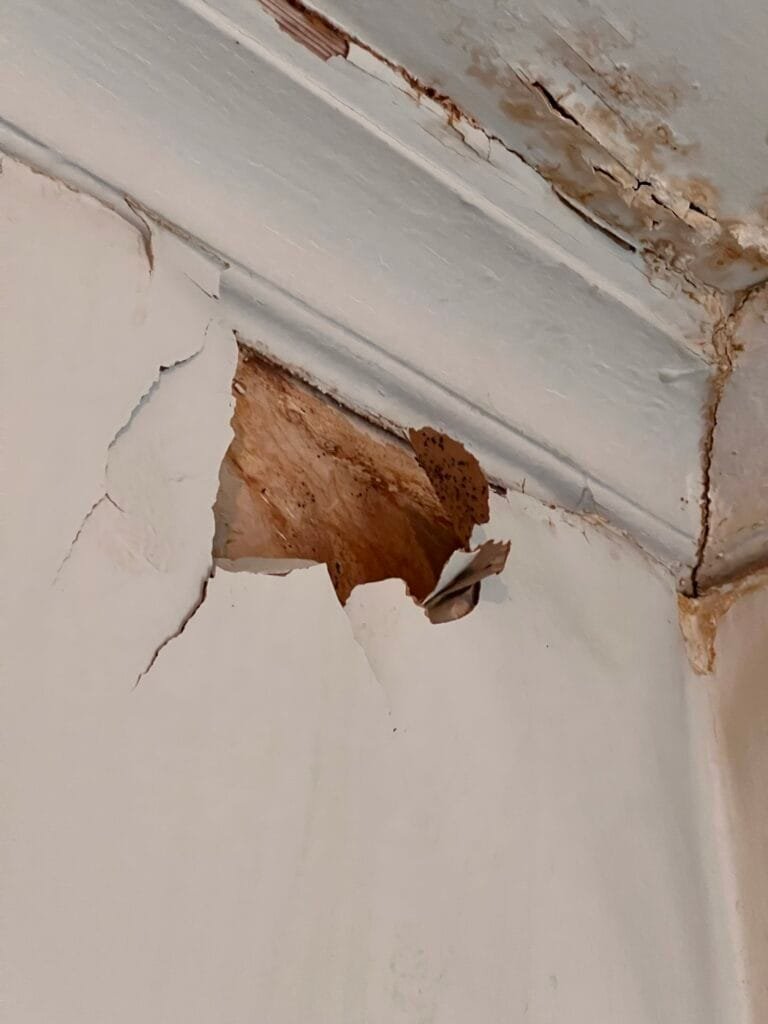
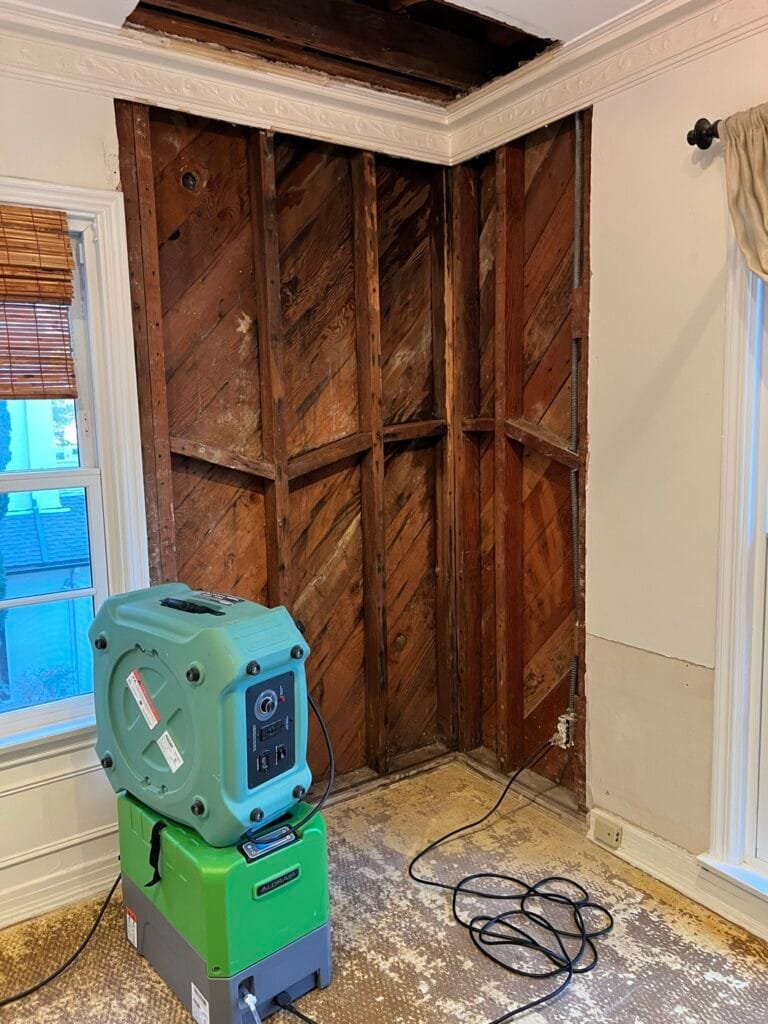
In an older home, a roof leak during heavy rain damaged the plaster and crown molding below it. We opened the wall to the original diagonal wood boards behind the plaster and set up drying equipment to dry the structure.
Window leak and mold
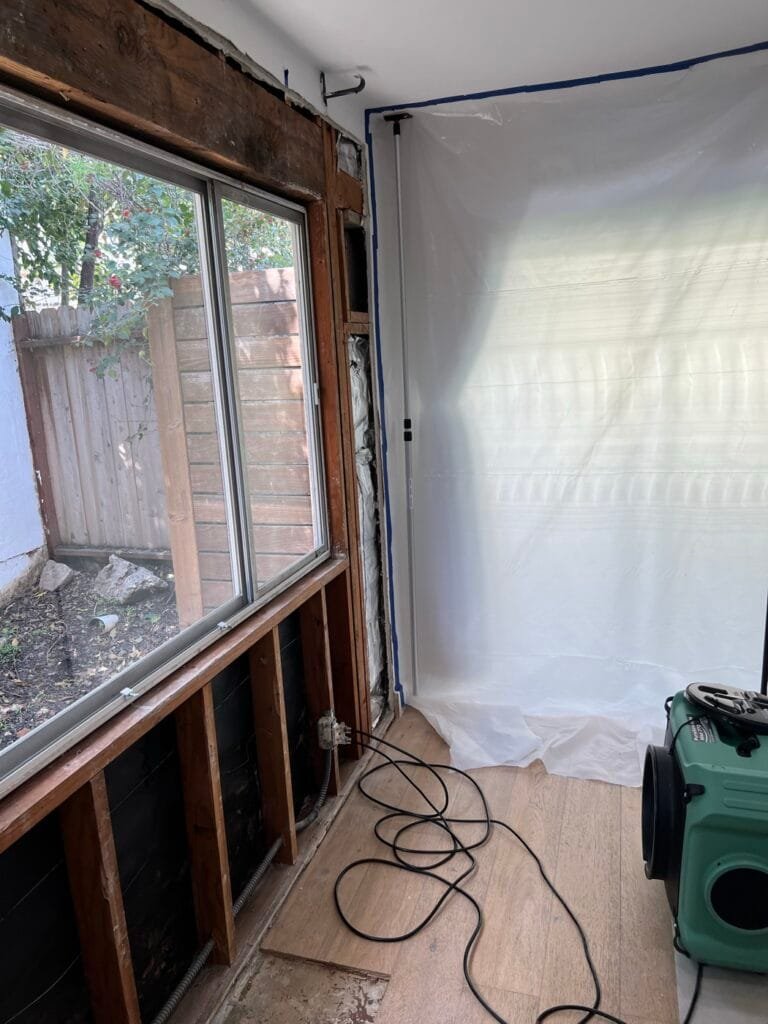
A window had been leaking for a long time, and mold grew inside the wall below it. We set up containment, opened the wall under the window, removed the affected materials and ran HEPA air filtration during the remediation.
Beverly Hills FAQ
Can the original plaster be saved?
Often, yes, if it’s dried properly and hasn’t been wet for too long or soaked with contaminated water. We check moisture in the plaster and the framing behind it before recommending removal.
Is the inspection free?
Yes. The initial on-site inspection and assessment are free.
My ceiling has a brown stain after the rain. What should I do?
Have it checked. A stain means water has already passed through the ceiling material. We can measure how far the moisture spread and whether the framing above is wet.
Do you work with my insurance company?
Yes. We document the damage with photos, moisture maps and drying logs, and prepare a line-item Xactimate estimate when needed. Coverage decisions belong to your insurer.
Do you speak Russian, Ukrainian or Hebrew?
Yes. I speak all three and can explain the damage, the plan and the insurance process in your language.
Other neighborhoods we serve
Beverly Hills (90210, 90211, 90212) · Bel Air · Hollywood Hills · West Hollywood · Encino · Sherman Oaks · Studio City · Calabasas · Malibu · Santa Monica