
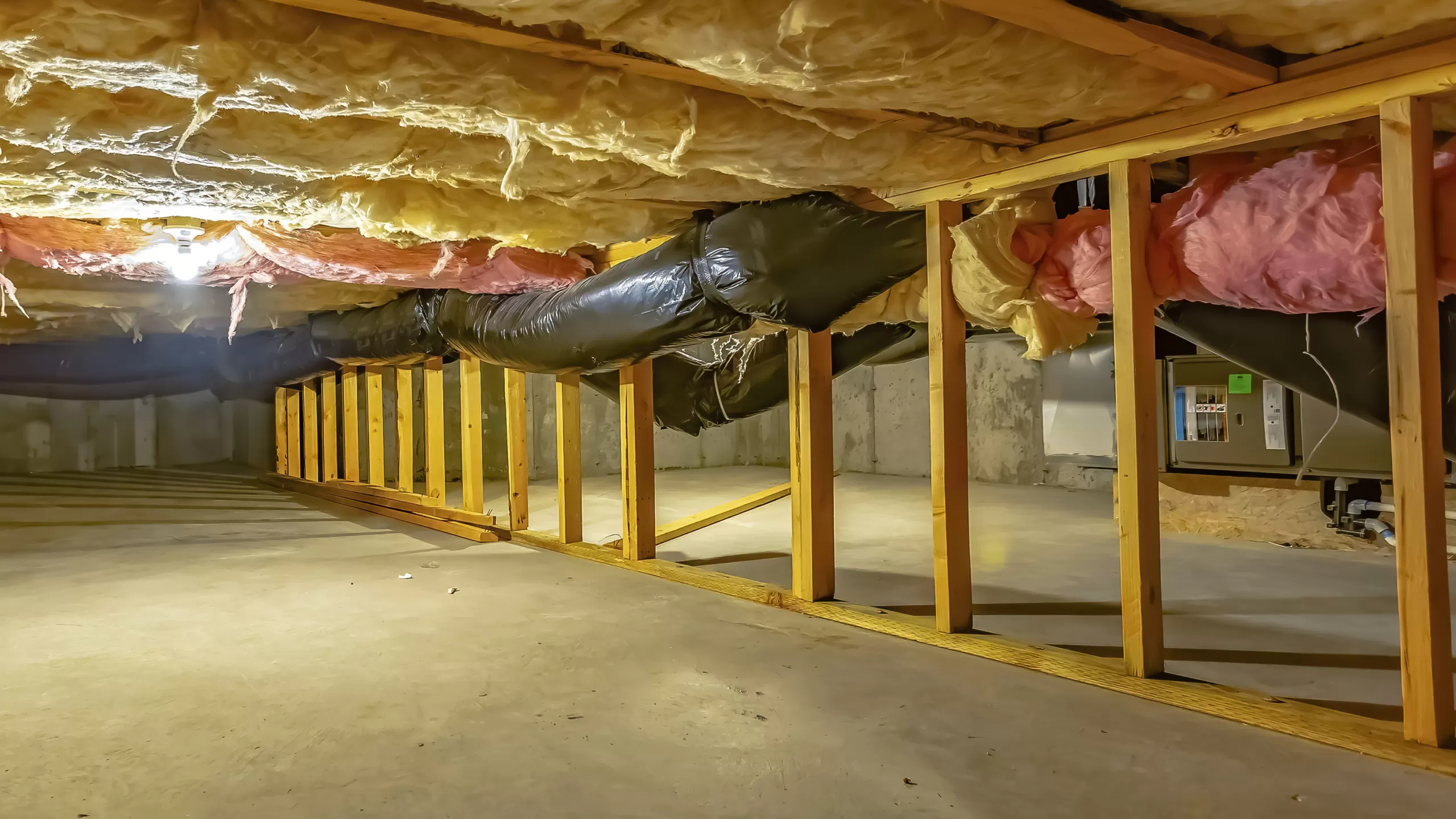
Most crawl space problems are found late, because nobody goes down there. A yearly check catches a slow leak, wet soil or a rodent problem while it is still a small job.
Here is what we look for, when cleaning is actually needed, and when it is not.
Why crawl spaces in LA deserve a yearly look
Many older homes in the San Fernando Valley, on the Westside and in the hills sit on raised foundations. Under the floor is a crawl space with the water supply lines, the drain lines and, in many homes, the heating and air conditioning ducts.
Because that space is dark and out of sight, a small drip from a drain line can run for months. The first sign upstairs is usually a musty smell, a soft spot in the floor or hardwood boards that start to cup.
By then the subfloor and joists have been wet for a long time. A yearly check is how you find it before that.
What we check during a crawl space visit
A visit is a walk-through of the whole crawl space with a flashlight, a moisture meter and a camera. We check:
- Plumbing: supply and drain lines, joints, and the areas under bathrooms, the kitchen and the laundry.
- Moisture: readings on the subfloor, joists and sill plate, compared with a dry area of the same material.
- Soil and drainage: standing water, wet soil after rain, water coming in from downspouts or grading.
- Mold growth on the framing and the underside of the subfloor.
- Rodents and pests: droppings, nests, damaged insulation, openings where animals get in.
- Insulation and vapor barrier: wet, torn, missing or fallen down.
- Ducts: crushed, disconnected or damaged runs. We note them in the photos; a licensed HVAC contractor we work with repairs or replaces them.
The visit is free. We walk you through what we found and show you the photos. If you need a full written report, for example for a sale or a landlord, we can prepare one for a small fee.
When cleaning is actually needed
Not every crawl space needs to be cleaned every year. Some years the check shows dry wood and dry soil, and that is the whole report.
Cleaning makes sense when we find:
- Rodent droppings, nesting material or dead animals.
- Wet, moldy or pulled-down insulation.
- Debris and old materials left behind from past repairs.
- Mold growth on the framing after a leak.
Cleaning means removing the contaminated debris and insulation, HEPA vacuuming, and cleaning the framing. Where there is mold, we remediate it following the IICRC S520 standard, then dry the area and confirm it with moisture readings. New insulation and vapor barrier are installed by a subcontractor we work with, after the area is clean and dry.
A note on droppings: do not sweep them or use a household vacuum. The CDC recommends wetting them with disinfectant first, because sweeping puts the dust in the air. If there is a lot of it, leave it to a crew with respirators and HEPA equipment.
Why moisture matters more than dirt
Dirt is normal in a crawl space. Moisture is the problem.
Wood framing that stays wet supports mold growth and, over time, rot. Air from the crawl space also moves up into the house, which is why a wet crawl space often shows up as a smell in the living room.
So the first step is always the source. A plumbing leak needs a plumber. Water from outside often comes from gutters and downspouts that empty next to the foundation, or from soil that slopes toward the house. Where water keeps collecting, a sump pump in the crawl space is worth discussing.
Cleaning a crawl space that is still getting wet only buys time.
Older homes: asbestos and lead
Many homes built before the 1980s have pipe insulation or duct wrap that may contain asbestos. Before anyone disturbs it, an independent certified consultant takes samples and the lab gives the answer. We do not sample it ourselves.
FastFix is EPA Lead-Safe certified for work that disturbs painted surfaces in older homes.
If the check finds an active leak
Stop the water first, then call us before you report it to your insurance. The first report should have facts: the source, how long it has likely been leaking, and what is wet. Guesses in that first call can cause problems later.
Your carrier decides coverage, and policies often treat long-term seepage differently from a sudden leak. Read your policy, and keep the photos from every yearly check. They show when the crawl space was last dry.
Our water damage guide explains what happens next, step by step.
FAQ
How often should a crawl space be checked? Once a year for most raised-foundation homes. Also check after any plumbing leak, and after heavy rain if your lot drains toward the house.
Do you clean or replace the ducts in the crawl space? No. If ducts are damaged or contaminated, a licensed HVAC contractor we work with cleans or replaces them.
Can I look in the crawl space myself? Yes, with a flashlight from the access hatch. Do not disturb droppings, insulation or old pipe wrap. Take photos and send them to us.
What areas do you serve? Ventura, Los Angeles and Orange counties.
Schedule a crawl space check
Call FastFix Restoration at (818) 717-7431. We will tell you what we find, and whether it needs work or not.
FastFix Restoration | CSLB #1083206 | IICRC Certified Firm #65893608
Related: Crawl space and attic cleanup