
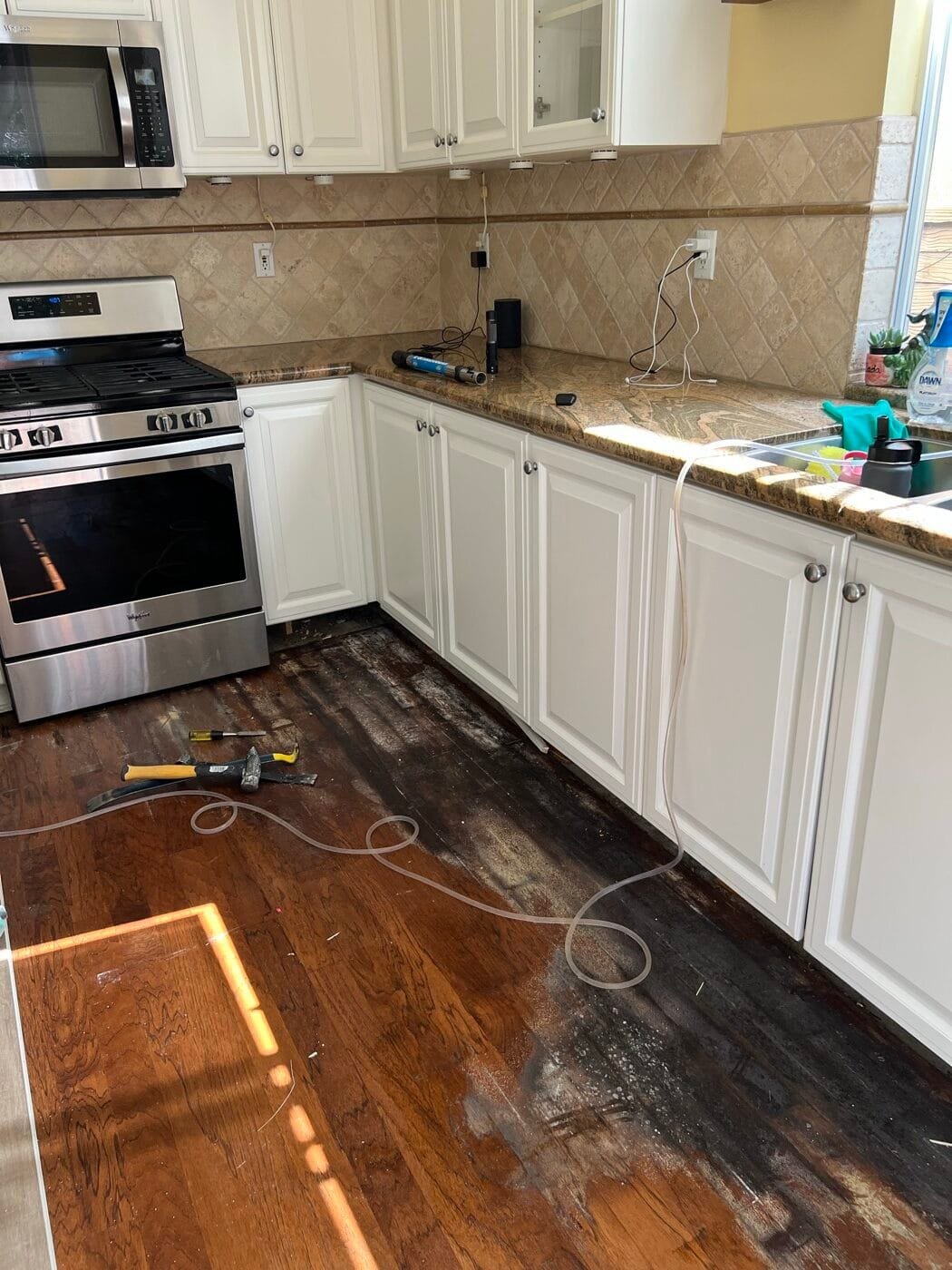
Most water damage in Los Angeles doesn’t come from floods. It comes from a supply line under a sink, a dishwasher, a water heater in the attic, a shower valve inside the wall, or rain coming through a roof or down a hillside. The water you see is usually the small part. The rest is under the floor and inside the walls.
I’m Igor, the owner of FastFix Restoration. Here is what to do first, how the damage is found and dried, and what we see on real jobs.
The first hour
- Stop the water. Close the valve under the fixture or the main shut-off for the house. For a water heater, close the cold-water valve on top.
- Turn off electricity in wet areas if you can do it safely from a dry spot.
- Take photos and video of everything before you move or throw away anything. Your insurance needs them.
- Move what you can off the wet floor: rugs, furniture, electronics, documents.
- Call for help. Wet materials start growing mold within 24 to 48 hours. Fast drying is what keeps a leak from turning into a mold job.
Don’t use a household vacuum on water, don’t turn on ceiling fixtures under a wet ceiling, and don’t close up anything that is still wet.
Clean water, gray water, sewage
How water damage is handled depends on where the water came from. The IICRC S500 standard splits it into three categories:
- Category 1, clean: a supply line, a faucet, a water heater. Usually dried in place.
- Category 2, gray: a dishwasher, a washing machine, a toilet bowl without waste. Some materials have to be removed.
- Category 3, contaminated: sewage, a toilet with waste, flood water from outside. Porous materials it touched are removed, and everything is cleaned and disinfected before drying.
Clean water can turn into Category 2 or 3 if it sits for days.
How water damage is found
Water travels. It runs along pipes, under cabinets, under wood and tile floors and down inside walls. We measure before we open anything:
- Moisture meters read the water inside drywall, wood and subfloor.
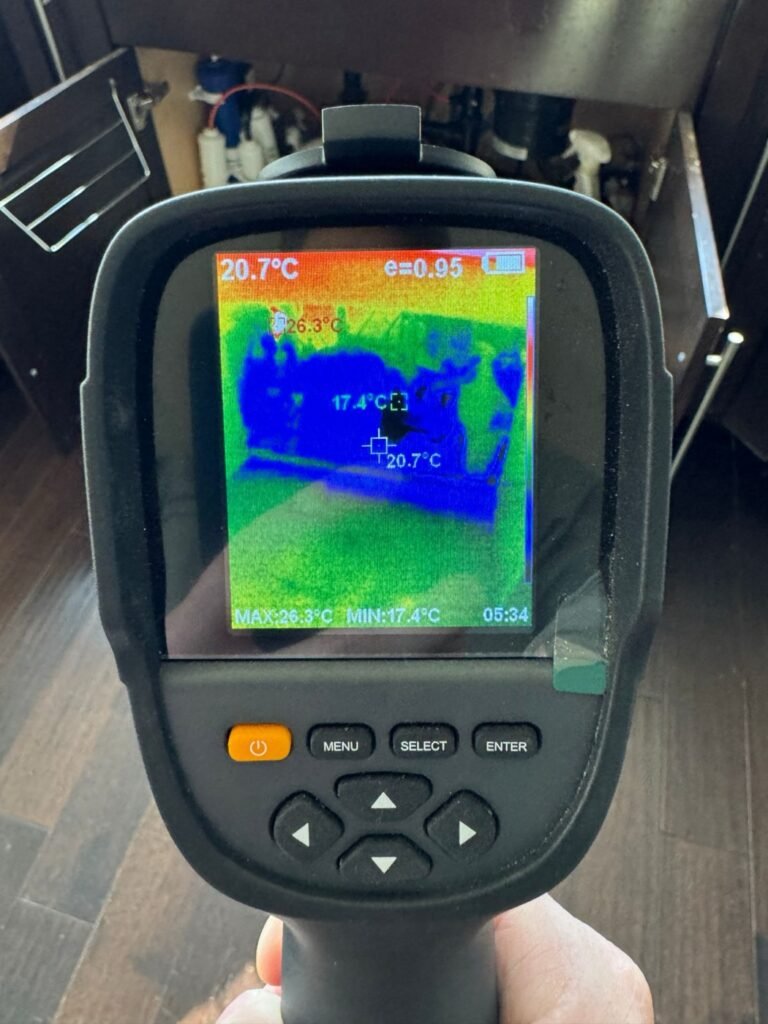
- A thermal camera shows the cool, wet areas you can’t see.
- The dry standard: we take readings of the same materials in an unaffected room. That’s the goal the wet areas have to reach.
That way we open only what’s wet.
How it’s dried and repaired
- Extract the standing water.
- Remove what can’t be dried or is contaminated. Wet insulation, swollen particleboard cabinets, carpet pad, and drywall that is too wet or touched dirty water.
- Open where needed. The bottom of the walls, the toe-kick under cabinets, a section of ceiling, so air can reach the wet framing.
- Dry the structure with dehumidifiers and air movers, and HEPA air scrubbers when there is demo or mold.
- Check readings every visit and keep a drying log.
- Close up only when the materials reach the dry standard. Then the repairs and reconstruction.
We don’t replace what can be saved. On a Santa Clarita job, we supported the countertop in place, removed the base cabinets, dried the walls behind them, and the countertop was saved.
Wood floors
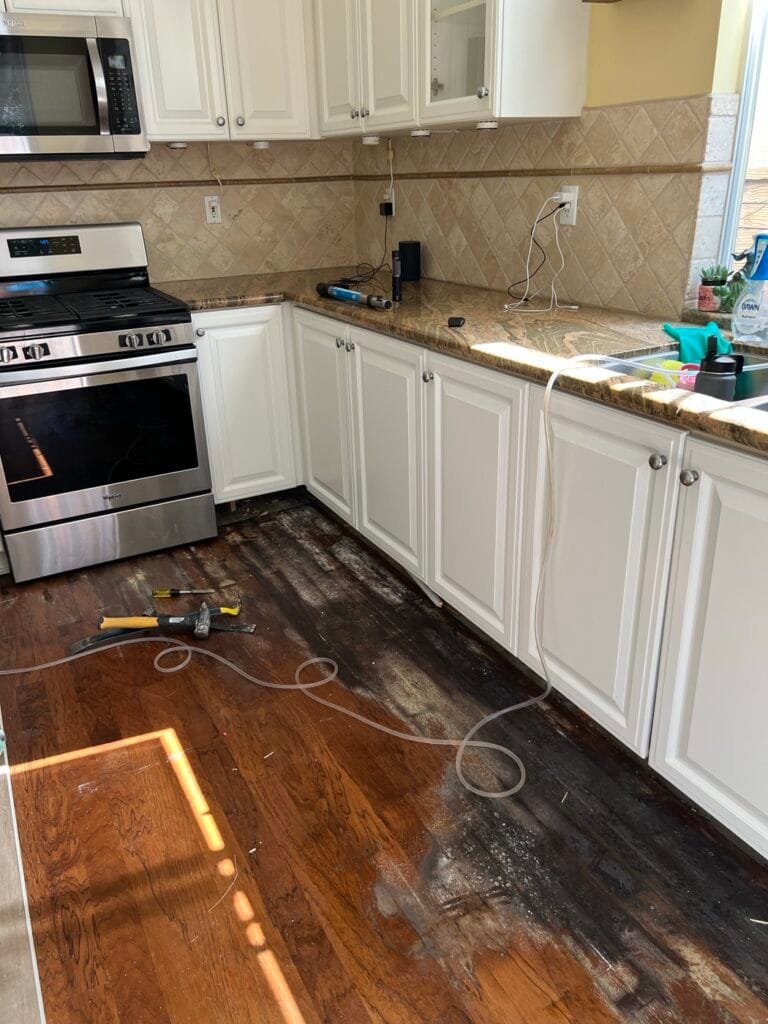
Water under a wood floor is easy to miss. The surface may look fine for a few days, then the boards cup, turn dark or start to lift. Some floors can be dried in place with special mats. Floors that turned black, separated or sit on a wet subfloor usually have to come up.
Rain, hillsides and crawl spaces
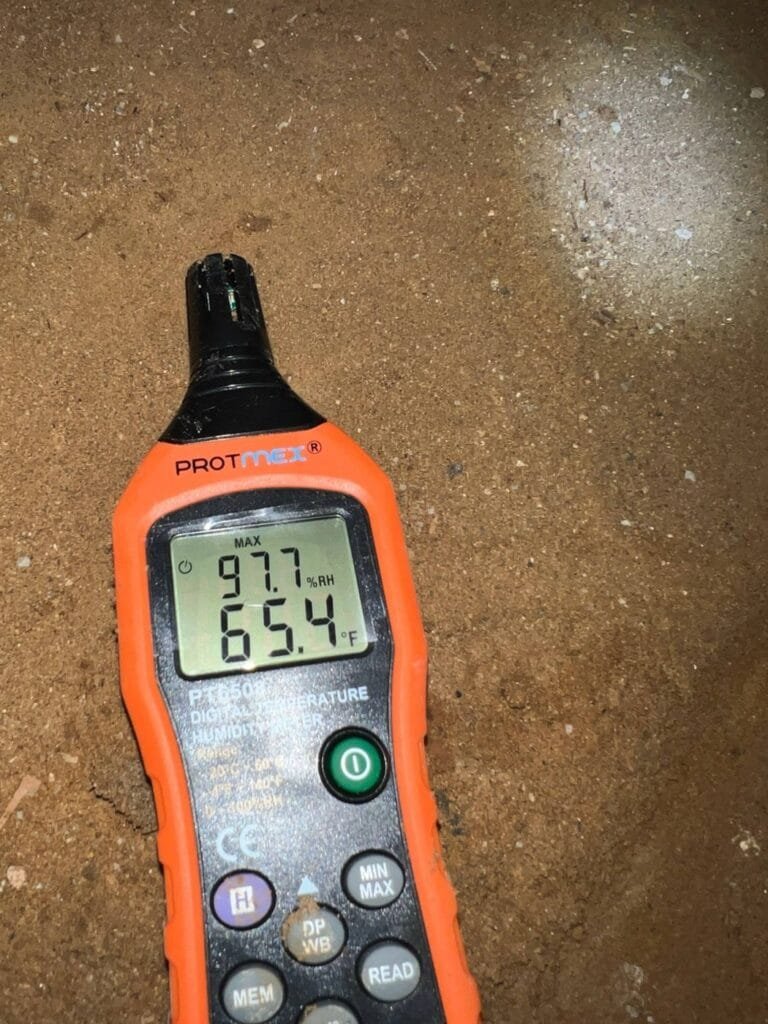
Los Angeles doesn’t have many basements, but it has a lot of crawl spaces and hillside homes. In heavy rain, water runs down the slope and under the house. On one Culver City job, the humidity under the house measured 97.7%. We dried the soil, framing and subfloor with a dehumidifier and air movers. If a crawl space isn’t dried, the moisture comes up into the floors and walls and mold follows.
Roofs, windows, balconies and planters leak in the rain too. Water that gets in often runs inside the wall before it shows.
Hidden damage to the structure
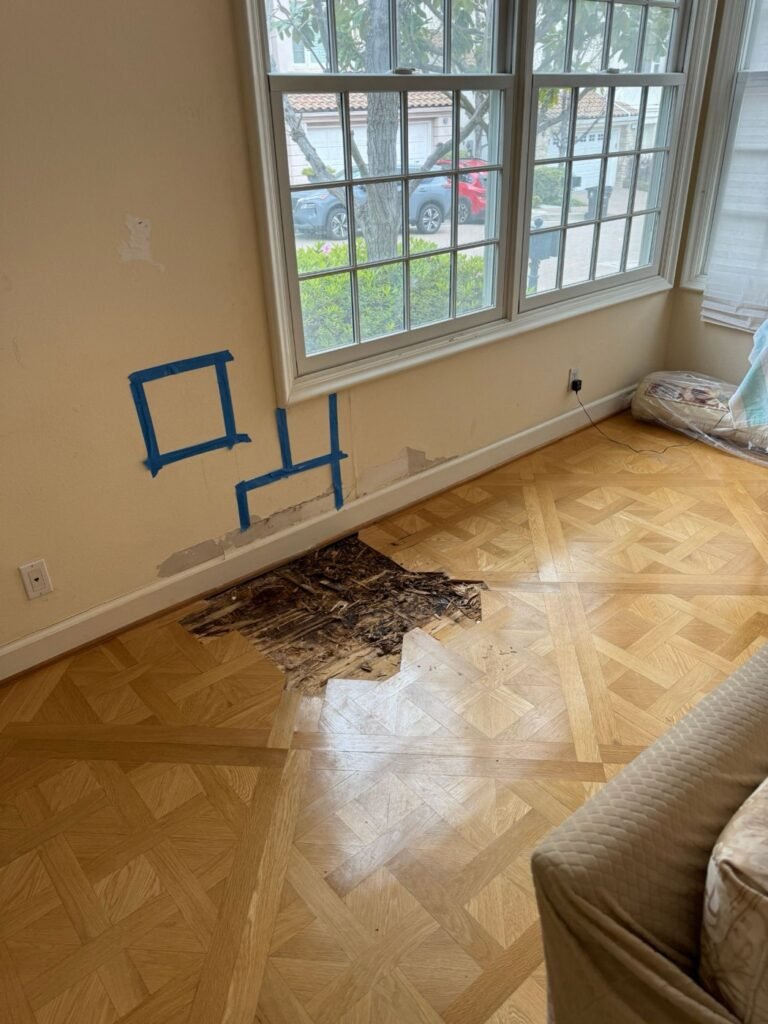
Long, slow leaks do the most damage because nobody sees them. In a Bel Air home, a planter next to a window had a waterproofing problem. When the parquet came up, the subfloor underneath was rotted. Wood that stays wet long enough rots, and some fungi can attack the structural framing. That’s why we find the source and dry the framing, not only the surface.
Apartments and condos
If water comes from the unit above or from a neighbor, the source decides whose insurance pays first. Take photos, tell the building manager or HOA right away, and write down when it started. We document the source and the damage so it can go to the right policy, including liability claims against the neighbor’s insurance. If you rent, tell your landlord in writing and protect your own belongings: renter’s insurance usually covers your contents, not the building.
Water damage and insurance
Sudden and accidental water damage, like a burst pipe or a failed supply line, is often covered. Long-term leaks, seepage and outside flooding often are not, and flood usually needs a separate flood policy. Your carrier decides what is covered. What helps is fast action and a clear record: photos, moisture readings, a drying log, and a list of what was removed and why. We work directly with your insurance company and document everything from the first day. More about the difference in water damage vs. flood damage.
Real jobs, in short
- Encino: a hot-water line in the attic burst and the water came down through the ceilings into the whole house. We mapped how far it traveled and dried the structure room by room.
- Beverly Hills: a water heater in the attic flooded a two-story house. Traced from the attic through both floors and dried floor by floor.
- Bel Air: a pinhole leak behind a shower valve. The wall looked fine, the moisture meter didn’t. We opened only what was needed.
- Sherman Oaks: a refrigerator supply line leaked under the cabinets and the wood floor. The thermal camera showed how far it went.
- Hollywood Hills: a toilet installed wrong leaked into the ceiling below. We opened the ceiling inside containment and dried the framing.
We answer 24/7 at (818) 717-7431. The on-site inspection is free. More about our water damage restoration.
Igor, Owner, FastFix Restoration
IICRC Master Water Restorer · CSLB #1083206